This is a Fun Trade
The A.J. Brown trade to New England is one of those moves that looks simple on the surface and gets messier the longer you stare at it.
A star receiver leaves Philadelphia. A young franchise quarterback in New England gets a true alpha. DeVonta Smith becomes the Eagles’ unquestioned WR1. Makai Lemon’s rookie runway opens. Eli Stowers matters a bit more in redraft and dynasty conversations. Jalen Hurts loses the most physically dominant receiving weapon of his career at the exact moment Philadelphia is attempting to rewire the offense. These are the headline stories.
The real fantasy question is a bit deeper: was A.J. Brown being held back by the structure of the Eagles’ passing game, or was he helping disguise the limitations of it? Because this is not just a player movement story. It is a scheme story. It is a quarterback evaluation story. It is a target redistribution story. And, most importantly for fantasy, it is a bet on which quarterback can unlock the routes Brown still wins at an elite level.
Brown goes from Jalen Hurts to Drake Maye. Philadelphia goes from a Brown-centered receiving structure to a new offense under Sean Mannion, with DeVonta Smith, Makai Lemon, Eli Stowers, Dallas Goedert, and a reworked receiver room. New England goes from needing answers around Maye to giving him the kind of receiver who can change coverage, punish press, win in condensed windows, and turn “good quarterback play” into a weekly fantasy ceiling.
Foundry Movement Tracker
New England Patriots ↔ Philadelphia Eagles
The blockbuster everyone saw coming.

- AJ BrownPHI · WR

- New England's 2028 1st
- New England's 2027 5th
Good luck, Jalen!
The Trade: A.J. Brown to New England
The reported deal sends A.J. Brown to the Patriots for a 2028 first-round pick and a 2027 fifth-round pick. Brown leaves Philadelphia after four seasons, a Super Bowl run, and a period where he was not just productive, but structurally important to the Eagles’ offense.
Even in what was described by many as a frustrating season, Brown still posted 78 receptions, 1,003 yards, and 7 touchdowns in 2025. That is the floor we are talking about. This seems to be lost on the eternally optimistic Eagles fans who "couldn't care less about A.J. Brown": a “down” A.J. Brown season still lands you 1,000 yards. There are no guarantees Devonta Smith (or Makai Lemon, or Dontayvion Wicks) can meaningfully step into that role.
That matters because wide receivers do not usually fall off a cliff while still commanding defensive respect, winning through contact, and producing through offensive friction. Brown’s fantasy value was not declining because he could not play. It was declining because the shape of the offense around him had become harder to trust. We've all seen the Jalen Hurts lowlights of a wide open Brown waiving his arms while Hurts is unable to make plays. Brown's frustrations were well documented, but due to the infamous Tush Push, fantasy players seem blind to Jalen Hurts' very obvious limitations at the QB position
This seems to be lost on the eternally optimistic Eagles fans: a “down” A.J. Brown season still lands you 1,000 yards.
A Deeper Look at Brown
Brown’s game has never been built on cheap volume. He is not a manufactured-touch slot receiver who needs eight layup targets to matter. He is a physical separator, a slant/post/dig/glance-route destroyer, a receiver who wins through leverage and strength, and one of the league’s best examples of how yards after catch can come from violence rather than gadget usage. That is why the New England fit is so interesting.
Brown’s best routes have historically attacked intermediate space and leverage windows. Slants, glance routes, digs, deep crossers, posts, in-breakers off play action, backside isolation routes, and vertical routes where he can stack or bully corners. The problem in Philadelphia was not that those routes largely disappeared due to poor execution by the QB. The problem was that the Eagles’ passing game often did not consistently live in the parts of the field where Brown is most dangerous.
Brown is at his best when the quarterback can throw with anticipation into the middle of the field. Not just when a receiver is visibly open. Not just when the read is clean. Not just when the pocket is perfect. Brown is at his best when a quarterback is willing to trust the leverage, rip the ball before the break, and let him be bigger and stronger than the coverage. That is where this move gets uncomfortable for the Eagles.
Because Brown did not merely leave behind target volume. He left behind a quarterback whose fantasy greatness has always been rushing-driven rather than passing-structure-driven. For fantasy, Brown should be treated as a high-end WR1 again (my hot take is that a top 3 season is not out of the question.) The age curve matters, but people passing Brown off as old forget that 32 year old Stefon Diggs was able to gain 1,013 yards on 85 receptions in this offense. Yes, Brown's contract matters, new team adjustment matters. But the environment is better than people may initially realize because Drake Maye’s profile is exactly the type of quarterback profile that can revive Brown’s intermediate and explosive ceiling.
The biggest risk is not talent. It is target competition and offensive distribution. New England has other pieces, and Brown will not necessarily need 160 targets to pay off. But if Maye is as good as his advanced profile suggests, Brown’s efficiency can spike even if the raw target count settles in the 125 to 140 range.
Fantasy verdict: Brown should be valued as a top-10 wide receiver with top-five weekly spike potential. In dynasty, this is a clear short-term value boost, especially for contenders.
Drake Maye: Can He Repeat 2025's Success? This won't hurt!
The biggest fantasy winner here is Drake Maye. Not because he needed A.J. Brown to be good. He already showed he was good (although many of the Drake "The Schedule" Maye crowd saw him get obliterated in the Super Bowl and wonder which version 2026 will bring.) The more important point is that Brown changes the way defenses have to play New England.
Maye’s 2025 profile was not empty production. He generated elite advanced value, including a reported +203.1 passing EPA, and he led the league in downfield completions and completions under pressure. Those are not game-manager indicators. Those are high-difficulty quarterback indicators. That matters for Brown because Maye is not simply a young quarterback with a big arm. He is a quarterback who can access difficult throws. Downfield completions, pressure completions, and EPA generation all point toward a passer who can create value outside of ideal conditions. While he struggled against legitimate defenses in the playoffs and that still raised some yet-to-be-answered questions, Drake Maye can throw. the. ball.
Brown is the type of receiver who magnifies that. In fantasy terms, Maye’s path to a true elite quarterback season becomes much more realistic. Before Brown, Maye needed to elevate the structure. After Brown, he can still elevate the structure, but now the structure can also elevate him.
Brown gives Maye:
A true isolation winner against man coverage.
A middle-of-the-field weapon who can win on in-breakers.
A contested-catch and contact-balance receiver.
A red-zone bully.
A coverage dictator who creates easier looks for everyone else.
This is how high quarterback fantasy ceilings are built. Not just through rushing. Not just through volume. Through the marriage of efficiency, explosive plays, and touchdown equity. Maye does not need to become Josh Allen as a runner to be a fantasy difference-maker. If Brown pushes his passing touchdown ceiling up and keeps New England in more aggressive game scripts, Maye can become a weekly top-six quarterback. Over a season, that can lead to a perennial top-3 finish (he was #2 last year.)
The key question is whether the Patriots offense leans into Brown as an intermediate alpha or tries to treat him like a traditional boundary X only. The former creates a fantasy eruption. The latter still helps, but caps the ceiling.
Fantasy verdict: Maye is one of the clearest quarterback risers in fantasy. He should be drafted as a QB1 with top-three upside.
Jalen Hurts: The Rushing Floor Remains, but He'll Have to Prove He Can Play
Jalen Hurts is one of the harder players to evaluate in this deal because his fantasy value and real-life passing profile have never been perfectly aligned. Hurts has been a solid fantasy quarterback because he combines rushing production, rushing touchdown equity, goal-line usage, strong supporting casts, and enough passing production to matter. But Brown’s departure forces a more precise question:
But how much of Hurts’ passing value was created by Brown?
Waiver wire spotlight
What happens to the world's top fullback?
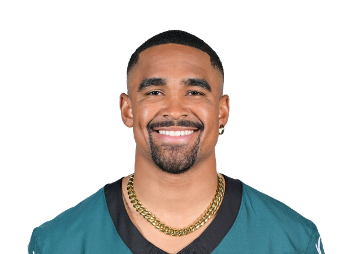
Jalen Hurts
PHI · QB
Hurts finished 2025 with passing yards, 25 touchdowns, 6 interceptions, and a 55.2 QBR. Those are solid numbers, especially when paired with rushing production. But they do not scream elite passer. They scream good fantasy quarterback with an elite rushing and touchdown structure.
- Yards
- 3,244
- TDs
- 25
- QBR
- 55.2
The Eagles have switched offensive coordinators and will be throwing Hurts into a sink or swim situation, making him play a game he isn't used to playing.
The issue is not whether Hurts can throw. He can, sometimes. The issue is whether he consistently accesses the full field in a way that sustains elite passing production. Despite Eagles' fans blinders, Brown’s frustration in Philadelphia was easy to understand from a football perspective. Hurts has often been most comfortable throwing outside the numbers, taking vertical shots, working isolation routes, and creating late with his legs. He is dangerous. He is powerful. He is difficult to defend. But he has not always operated like the best middle-of-the-field quarterbacks, the ones who punish linebackers, throw with early anticipation, and turn in-breaking routes into an offensive identity.
This matters even more under Sean Mannion.
Philadelphia is not just replacing Brown. The Eagles are also transitioning into a new offense with more under-center elements, more play-action structure, and more influence from the Shanahan/McVay/LaFleur family of offense. That world generally asks the quarterback to do certain things:
Turn his back to the defense on play action.
Reset quickly.
Throw intermediate in-breakers on time.
Attack windows between linebackers and safeties.
Trust spacing.
Win rhythm throws before second-reaction playmaking is needed.
That is not the same as saying Hurts cannot do it. But it is fair to say this is not the easiest version of the sport for him. The fantasy danger is that Hurts remains good, but loses some of the passing spike weeks Brown helped create. Brown’s physical dominance covered for late throws, imperfect placement, and low-volume passing environments. He could turn a modest target game into 90 yards and a touchdown. Without him, Hurts may need the offense itself to create cleaner answers. Worst case for Hurts is that the Eagles need to pass the ball to win (Saquon Barkley is not getting any younger, mind you,) and Hurts' weaknesses are exposed.
The rushing will still matter. The goal-line role will still matter. The Eagles’ offensive line, if it remains strong, will still matter. Hurts is not falling out of fantasy QB1 territory because Brown is gone. But his margin for elite fantasy outcomes is thinner. Fantasy verdict: Hurts remains a QB1, but the overall QB1 ceiling becomes harder to project unless the new offense truly modernizes him as a passer. He should be valued behind the elite dual-threat and high-volume passers, not automatically grouped with them.
DeVonta Smith: The Volume Case Is Obvious, but the Efficiency Question Is Real
DeVonta Smith is the cleanest Eagles fantasy riser on paper. Brown leaves behind a massive target void. Smith is now the most established receiver in Philadelphia. He is coming off a 2025 season with 77 receptions, 1,008 yards, and 4 touchdowns. His advanced opportunity profile already showed a receiver who was heavily involved, including strong route participation and meaningful slot usage.
The easy take is that Smith becomes the Eagles’ WR1 and therefore jumps into the fantasy WR1 conversation. The better take is more cautious.
Smith’s target share can rise, but his role may change in a way that adds both ceiling and difficulty. When Brown was on the field, Smith often benefited from being the second problem. Defenses had to account for Brown’s physicality, his red-zone presence, and his ability to win against single coverage. Smith could move around, attack space, and win as a cleaner separator. Now Smith may draw more primary coverage attention.
That does not mean he fails. Smith is a terrific player. His route running, body control, sideline awareness, and ability to uncover are all fantasy-friendly traits. But he is not Brown. He does not win the same way. He does not impose the same physical cost on defenses. And if Hurts is still inconsistent attacking the middle of the field, Smith’s weekly output could become more dependent on schemed touches, vertical shots, and game script.
The Mannion offense may help him. In a more structured play-action system, Smith could be used on crossers, deep overs, choice routes, motion releases, and layered concepts that create cleaner access. If that happens, Smith could produce his best fantasy season.
But if Philadelphia simply removes Brown and asks Smith to absorb WR1 defensive attention in the same old passing ecosystem, there is fragility here. It's also important to point out that Philadelphia traded up to snag Makai Lemon, an early fantasy darling.
Fantasy verdict: Smith is a strong WR2 with WR1 upside, but he should not be treated as an automatic elite fantasy WR1. The volume is coming. The question is whether the offense creates enough high-value targets.
Makai Lemon: The Rookie With the Most Immediate Pressure
Makai Lemon’s situation changed immediately with the trade.
Before the Brown trade, Lemon looked like a talented first-round receiver who might be eased into a layered role. After the trade, he becomes a central piece of the Eagles’ post-Brown identity. Lemon’s college profile is very fantasy-friendly in the abstract. He was highly productive at USC, winning the Biletnikoff Award after a 79-catch, 1,156-yard, 11-touchdown season. He is generally viewed as a polished route runner with excellent hands, toughness, and strong spatial awareness. He also played a heavy slot role in college, reportedly lining up inside on a large percentage of his snaps.
If Lemon is primarily a power slot, he can theoretically become a middle-of-the-field answer for the Mannion offense. He can run option routes, choice routes, crossers, sit routes, glance routes, and underneath/intermediate concepts that help Hurts find rhythm. But there are problems: the middle of the field is where Hurts' struggles have been most pronounced, and Philadelphia already has multiple players who can occupy those interior spaces. Smith can play inside. Goedert can work the seams and intermediate middle. Stowers is a receiving tight end with slot/big-slot traits. If Lemon’s most natural early-career role overlaps with the tight ends and Smith’s movable usage, his rookie volume may be less obvious than the depth chart suggests.
The outside receiver question is also important. If Brown is gone, someone has to threaten on the perimeter. Lemon has upside outside, but asking a rookie who won heavily through polish and slot usage to immediately replace Brown’s boundary gravity is a big leap. This does not mean Lemon is a fade. It means his fantasy value depends on role clarity.
Best-case scenario
Lemon becomes the manufactured-separation answer in a reworked offense, earning 90 to 110 targets as the Eagles use more motion, play action, and middle-field concepts.
Worst-case scenario
He is good in real life, but he rotates between slot and outside work while Smith, Goedert, Stowers, and the backs divide the short and intermediate volume. There's obvious frustration/relationship risk here as well.
Fantasy verdict: Lemon is valuable in dynasty , to be sure. In redraft, he is a high-upside bench receiver. In dynasty, the Brown trade gives him a much clearer long-term runway, but the Year 1 target projection should not get out of control. Hurts' inability over the middle of the field does not project well for Lemon's value.
Eli Stowers: The Sneaky Winner, but Maybe Not Right Away
Eli Stowers is the player fantasy managers may overlook because Brown’s departure naturally pushes attention toward Smith and Lemon. That could be a mistake. Stowers is not a traditional tight end prospect. He is a former quarterback turned receiving weapon, drafted in Round 2 after winning the Mackey Award. He brings athleticism, ball skills, spatial awareness, and a profile that makes more sense as a modern mismatch piece than a classic in-line tight end.
If Philadelphia’s new offense leans into 12 personnel, play action, condensed formations, and middle-of-the-field route structures, Stowers could become a direct beneficiary. In that kind of system, tight ends are not just blockers. They are formation tools. They define coverage. They create mismatches. They run crossers, seams, leaks, options, and intermediate sit routes off run action. The problem is immediate snap share.
Yes, Dallas Goedert is still there. Yes, Grant Calcaterra was re-signed. Philadelphia has multiple tight ends. That could mean the Eagles are doubling down on heavier personnel and run/play-action structure. It could also mean Stowers is not a full-time player immediately. For fantasy, the question is whether Stowers can earn a receiving role independent of traditional TE1 usage. If he is used as a big slot, movement tight end, or package weapon, he can matter earlier than most rookie tight ends. If he is buried behind Goedert and asked to develop as a blocker, the breakout is likely delayed. If he's able to ram around, he might be a sneaky pick in dynasty.
Stowers also intersects with the Hurts middle-of-field question. If Hurts adapts, Stowers could become one of the answers. If Hurts does not, Stowers may become another talented middle-field option whose fantasy relevance is capped by quarterback tendencies.
Fantasy verdict: Stowers is an excellent dynasty stash and a late best-ball target. In normal redraft leagues, he is more watch-list than draft priority unless training camp reports show a real package role.
The Philadelphia Offense: More Modern, More Crowded, More Uncertain
The Eagles are trying to do something difficult: change offensive identity while removing their most physically dominant receiver. Sean Mannion’s arrival points toward a more structured offense, likely with more under-center work, more outside zone influence, more play action, more condensed formations, and more rhythm throws. That is a meaningful philosophical shift from the version of Philadelphia that often relied on shotgun, quarterback run threat, isolation routes, and Brown’s ability to win difficult targets.
In theory, the shift makes sense. The Eagles have Saquon Barkley. They have a quarterback who can threaten defenses with his legs. They have Smith, Lemon, Goedert, Stowers, and enough receiving talent to build a layered passing game. The natural answer is to make defenses defend width, depth, run action, and quarterback movement. But theory and execution are not the same thing. This offense now has three big questions:
Can Hurts consistently play on time within a more structured offense?
Can Smith handle WR1 attention without Brown’s gravity?
Can Lemon and Stowers give the Eagles enough middle-field answers to replace what Brown did in a different way?
The Eagles may become more diverse. They may become more efficient. They may become harder to predict. But fantasy managers should not confuse “more modern” with “more bankable.” Brown’s departure removes one of the few bankable pieces of the passing game. The new version may be better for real football balance, but less concentrated for fantasy.
Philadelphia could spread the ball around more. Smith could lead the team in targets. Lemon could become a strong rookie contributor. Goedert and Stowers could both matter. Barkley could benefit from lighter boxes and play-action structure. Hurts could become a more complete quarterback. All of that can be true while no Eagles pass catcher becomes the fantasy hammer Brown once was.
The Patriots Offense: Brown Gives New England a True Weekly Ceiling
New England’s side is cleaner. The Patriots had the quarterback. Now they have the receiver.
Maye’s 2025 profile suggested a quarterback capable of creating elite passing value even without a perfect ecosystem. Brown gives him a target who wins in the exact areas that separate good offenses from dangerous ones. Third down. Red zone. Intermediate middle. Isolated backside. Two-minute drill. Play-action crossers. Pressure answers.
Brown does not just raise Maye’s statistical ceiling. He changes defensive math. Safeties have to respect him. Corners need help. Linebackers get stressed by glance routes and RPO looks. Other receivers see cleaner matchups. The run game can benefit if defenses hesitate to spin safeties aggressively into the box. That is why this move can have a bigger fantasy impact than a normal receiver trade. Brown is not just another target. He is an offensive organizer.
Fantasy Rankings Impact
Market movers
Foundry shifts after the trade
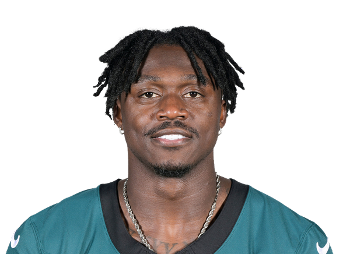 AJ BrownNE · WRHe's motivated. He's going to go off.UP+++
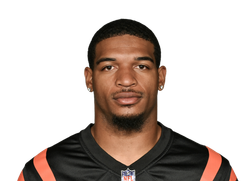 DeVonta SmithPHI · WRCan he handle a WR1 role? He'll get the chance to show us.UP++
 Eli StowersPHI · TEHe has an uphill battle, but he could be the biggest winner from this trade.UP+Jalen HurtsPHI · QBIt's not the end of the world, unless it is.DOWN--
A.J. Brown
Stock: Up
Brown returns to strong WR1 status. The move to Maye gives him a quarterback more likely to maximize intermediate and downfield efficiency. There is some age and transition risk, but the offensive fit is excellent.
Suggested range: WR8 to WR14
Drake Maye
Stock: Way up
Maye now has a true alpha receiver who can turn high-level quarterback play into elite fantasy production. He should be treated as a serious breakout candidate, not just a “nice young QB.”
Suggested range: QB6 to QB10, with top-five upside
Jalen Hurts
Stock: Down slightly
Hurts remains a fantasy QB1 because of rushing and touchdown equity, but Brown’s departure reduces his passing safety net. The new offense could help, but it also asks him to prove he can consistently win in a more structured, timing-based system.
Suggested range: QB6 to QB10, depending on rushing projection
DeVonta Smith
Stock: Up, but with risk
Smith gains target upside and becomes the clear top receiver in Philadelphia. But Brown’s departure also means more defensive attention and less gravity around him. He is a strong WR2 with WR1 upside, not a slam-dunk elite WR1.
Suggested range: WR14 to WR22
Makai Lemon
Stock: Up in dynasty, modestly up in redraft
Lemon’s long-term path is much clearer. The question is whether his rookie role is immediately fantasy-friendly or whether he has to fight Smith, Goedert, Stowers, and the backs for interior targets.
Suggested range: late-round redraft bench pick, obvious first-round rookie pick depending on format
Eli Stowers
Stock: Up in dynasty
Stowers becomes more interesting because the Eagles may need middle-field answers and could lean into heavier personnel. His Year 1 ceiling depends on how quickly he earns snaps behind or alongside Goedert.
Suggested range: dynasty stash, best-ball late-round swing, redraft watch list
Final Takeaway
The A.J. Brown trade is a fantasy earthquake because it forces us to separate quarterback fantasy value from quarterback passing value. Brown leaves an offense where his physical dominance helped cover for structural passing limitations. He joins a quarterback whose advanced profile suggests he can access the throws Brown still wins on. That makes Brown and Maye the cleanest winners.
Philadelphia is more complicated. The Eagles may become more modern under Sean Mannion. They may use more under-center looks, more play action, more motion, and more middle-of-the-field structure. That could help Jalen Hurts grow. It could unlock DeVonta Smith in a true WR1 role. It could create immediate opportunity for Makai Lemon and long-term intrigue for Eli Stowers.
There's also significant risk. Brown was not just a receiver. He was a stabilizer. He was the player who made difficult offense look functional. He was the player who could win when the timing was late, the window was tight, or the concept did not create enough separation on its own.
Now New England gets that stabilizer. Philadelphia gets a test.
For fantasy, the trade is a green light on Drake Maye, a renewed buying window on A.J. Brown, a cautious boost for DeVonta Smith, a dynasty bump for Makai Lemon and Eli Stowers, and a subtle but real warning sign for Jalen Hurts. Hurts can still be great for fantasy. But without Brown, the Eagles are about to find out whether their quarterback can elevate the passing game, or whether the passing game had been leaning harder on Brown than anyone wanted to admit.